America’s fascination with charismatic figures selling simple solutions—whether through 19th-century snake oil or modern political rallies—reveals a deep-rooted desire for reassurance amid complexity. Charisma and spectacle captivate audiences by creating emotional bonds, often prioritizing entertainment over substance. Leaders like Clark Stanley and Donald Trump understand that storytelling, theatricality, and emotional resonance forge trust and loyalty, even when promises are exaggerated or misleading. This persistent appeal raises a provocative question: are we genuinely seeking authentic cures or simply drawn to the illusion of quick fixes? As spectacle dominates today’s political landscape, it risks fueling misinformation, societal division, and superficial loyalty. Recognizing the power—and peril—of charisma and showmanship is crucial. How can society foster genuine leadership rooted in truth, ensuring that the desire for certainty doesn’t lead us astray into the seductive but hollow world of spectacle?

Unmasking America’s Fascination with Charisma and Spectacle
America has a long-standing fascination with figures who promise simple solutions to complex problems. From the carnival sideshows of the 19th century to today’s political rallies, charisma and spectacle have always played a central role in capturing public attention. These personalities tap into a universal desire for reassurance—offering quick fixes that seem immediate and personal. We often find ourselves drawn more to their confidence and theatrical flair than to the substance of their messages.
This attraction isn’t just about entertainment; it reveals something deeper about human psychology. When life feels overwhelming or uncertain, stories and symbols that simplify reality become especially appealing. Charismatic leaders craft identities that feel authentic and relatable, even when their promises are exaggerated or overly simplistic. Their emotional performances forge bonds that make supporters feel seen, understood, and hopeful—sometimes even more than they believe in the actual policies they promote.
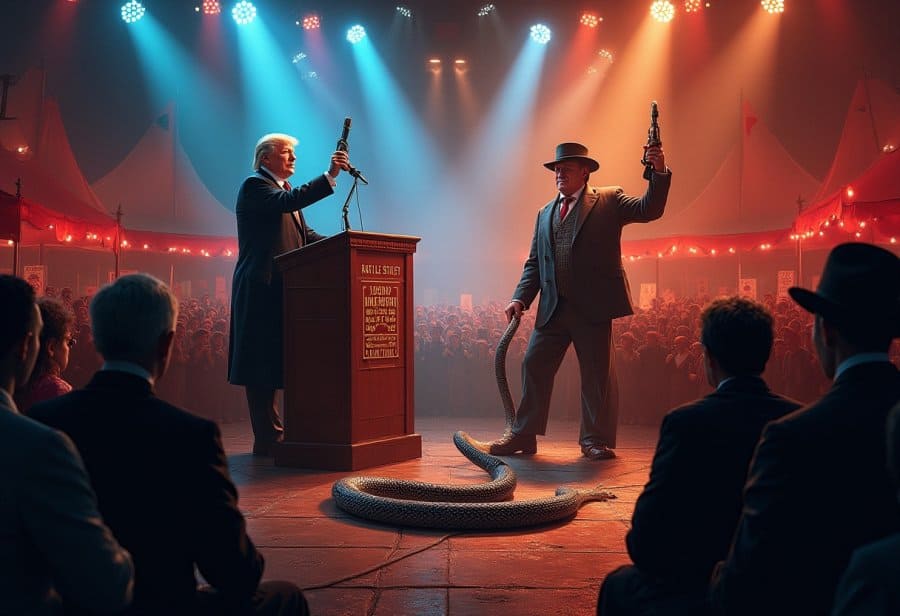
Looking back, spectacle has always been a key ingredient in American influence. The 19th-century medicine shows, for example, used dramatic acts—like pulling rattlesnakes from sacks—to sell miracle cures. Today’s political rallies and media events follow a similar pattern, transforming campaigns into energetic performances designed to stir emotion and reinforce group identity. Both rely on spectacle to persuade, often prioritizing emotional impact over factual accuracy.
This enduring appeal of charisma and showmanship isn’t just about entertainment; it’s rooted in our collective craving for certainty. In a world filled with complexity, simple slogans and emotional appeals provide a comforting sense of control. Whether it’s snake oil or a catchy political phrase, these promises act as quick escapes from chaos—offering hope, even if they lack real substance. This pattern continues to shape how Americans respond to leadership and influence.
Decoding the Power of Charisma, Spectacle, and Persuasion
Charisma, spectacle, and persuasion are the core tools that explain why certain figures seem to effortlessly capture American attention. Charisma isn’t just about charm; it’s a magnetic quality that makes followers feel inspired and loyal without needing formal authority. Leaders with charisma project confidence and authenticity, often making exaggerated or oversimplified messages seem genuine. Spectacle involves dramatic visuals, theatrical gestures, and memorable moments that evoke strong emotional reactions, transforming events into performances that linger long after they’re over.
Persuasion, meanwhile, is the art of influencing beliefs and behaviors through rhetoric, symbolism, and emotional appeals. These elements work hand in hand—leaders craft compelling narratives, employ theatrical flair, and connect on a visceral level. The 19th-century medicine show relied heavily on spectacle, using dramatic acts like pulling rattlesnakes or performing daring feats to captivate audiences and sell quick cures. Today’s political rallies and media events serve similar purposes, turning campaigns into energetic performances meant to stir emotions and reinforce group identity.
Understanding these concepts helps decode the persistent appeal of spectacle and charisma. Charismatic figures create an illusion of authenticity that resonates deeply, even if their messages lack substance. Spectacle amplifies this effect, making messages memorable and emotionally charged, often replacing rational debate with visceral experience. Persuasion then becomes storytelling—tapping into primal instincts like hope, awe, or fear—shaping perceptions in powerful ways.
Historically, showmanship has been woven into American culture. The 19th-century medicine shows used theatrical acts to evoke wonder and trust, blending entertainment with persuasion. Modern politics echoes this tradition, with rallies and media events functioning as entertainment spectacles that energize supporters and deepen group bonds. This reliance on spectacle and emotion taps into our natural craving for simple, clear answers in a complex world, making influence more about feeling than facts.
The Persistence of Spectacle in Today’s Political Arena
In today’s political landscape, spectacle and straightforward messaging remain powerful tools for charismatic leaders. Donald Trump’s rallies exemplify this, transforming routine political events into high-energy performances filled with slogans like “Build the wall” and “Make America great again.” These moments focus less on detailed policies and more on stirring strong emotional reactions, creating a shared sense of purpose and belonging among supporters. The media amplifies these events, turning them into viral moments that often prioritize personality and emotion over nuance and complexity.
Social media has taken spectacle to new heights. Viral videos, memes, and hashtags enable populist figures worldwide to build followings based on charisma and emotional resonance rather than substantive debate. Leaders leverage simple, memorable messages that cut through the noise, making complicated issues seem urgent and easy to grasp. This approach appeals especially to those frustrated by traditional politics or overwhelmed by information overload, offering quick answers and clear enemies or solutions.
Despite increased fact-checking and journalistic scrutiny, the allure of spectacle persists. Supporters often respond more to the emotional experience—the feeling of being understood and validated—than to the factual content behind the message. Populist leaders tap into collective anxieties and hopes, packaging them into rallying cries that energize crowds and deepen group identity. Their success demonstrates that emotional engagement often outweighs factual accuracy in shaping political loyalty today.
This trend reflects a shift where influence relies less on detailed policy and more on entertainment-like experiences that resonate on a primal level. Visual impact and storytelling are now central, often overshadowing complexity and nuance. As misinformation spreads more easily through sensational content, the line between genuine leadership and superficial spectacle blurs, challenging the foundations of informed democracy.
The ongoing appeal of spectacle poses serious questions for democratic societies. When emotional fervor and theatricality overshadow facts, misinformation can flourish, and critical thinking diminishes. Citizens become more vulnerable to manipulation, accepting slogans as solutions and losing sight of deeper issues. Recognizing this dynamic is essential for fostering a public capable of discerning genuine leadership from mere performance.
Understanding how spectacle influences political discourse can also shed light on historical figures who relied on charm and persuasion to sway public opinion. For a deeper look into how such tactics have been used historically, see this article about the classic snake oil salesmen, who mastered the art of convincing audiences through charisma and spectacle: Snake Oil Salesman.
Harnessing Spectacle Responsibly: Strategies for Politics, Media, and Movements
Understanding the power of spectacle and charisma isn’t just about recognizing their influence—it’s about learning how to use them responsibly. Politicians and leaders can build trust by balancing emotional appeal with transparent, evidence-based policies. When leaders connect on a human level and back up their messages with facts and clear actions, they foster genuine confidence rather than superficial loyalty. This approach helps avoid the trap of relying solely on showmanship, which may entertain but can also mislead or distract from real issues.
Media organizations play a crucial role in shaping public perception. By promoting media literacy and critical thinking, they empower audiences to question sensational headlines, emotional appeals, and misleading imagery. Encouraging viewers to ask questions like “What’s the evidence?” or “Who benefits from this message?” fosters a more skeptical and informed public. Fact-checking services and responsible journalism are essential tools for exposing false claims and preventing misinformation from spreading through spectacle-driven narratives.
Educational programs are vital in cultivating a society that values nuance and critical analysis. Teaching individuals how to evaluate sources, recognize manipulation tactics, and understand emotional appeals reduces vulnerability to superficial persuasion. When people develop these skills, they become better equipped to see beyond entertainment and engage thoughtfully with complex issues. Promoting curiosity and skepticism creates a culture where substance matters and spectacle serves to inform rather than deceive.
Social movements can harness spectacle thoughtfully to inspire genuine participation. When organizers craft emotionally resonant stories backed by clear, meaningful goals, they mobilize communities without sacrificing authenticity. Symbols, rituals, and shared narratives foster a sense of belonging that motivates action. Ensuring that spectacle complements sincerity rather than masks issues or false promises maintains the integrity of the movement.
Leaders and organizers must also uphold ethical standards in their campaigns and events. Transparency about funding sources, clear communication of objectives, and accountability mechanisms build trust with supporters. Regular evaluation of impact and adherence to ethical practices ensure spectacle energizes audiences without crossing into manipulation. When used responsibly, spectacle can amplify important messages while maintaining credibility.
Financial planning is essential to manage the costs associated with spectacle-driven initiatives. Investing in staging, visuals, and logistics can be expensive, so focusing on elements that maximize emotional impact without frivolous spending is key. Strategic resource allocation, clear budget oversight, and transparency prevent costs from spiraling and protect the initiative’s integrity. Effective financial management ensures that investments serve their purpose—engaging audiences genuinely and sustainably.
Ultimately, fostering a culture that values authenticity over entertainment requires ongoing effort. Supporting independent journalism, promoting civic education, and encouraging critical engagement help society demand substance alongside spectacle. When the public insists on genuine leadership rooted in truth and integrity, leaders are more likely to prioritize meaningful change over superficial showmanship. This balance strengthens democratic foundations and builds a more resilient, informed community.
Balancing Costs and Commitments in Spectacle-Driven Campaigns
Managing spectacle-driven initiatives demands careful planning around costs and resource allocation. Whether organizing political rallies, entertainment events, or social movements, creating memorable moments requires investment in staging, visuals, sound equipment, and logistics. These elements can add up quickly, especially when aiming for emotionally charged experiences that resonate deeply with audiences. Funding sources vary widely—from government grants and private donations to media partnerships and the personal wealth of leaders—each with their own expectations and strings attached.
A thorough cost analysis helps determine whether the emotional and psychological returns justify the expenditures. Leaders need to weigh the benefits of energizing supporters and shaping narratives against the risk of overspending. Extravagant displays like fireworks, elaborate staging, or high-tech visuals can inflate budgets rapidly, so it’s crucial to focus on elements that maximize emotional engagement without unnecessary extravagance. Regular budget monitoring ensures resources are used efficiently and helps maintain transparency, preventing costs from spiraling out of control.
Funding often flows from multiple channels, each motivated by different interests. Governments may support public celebrations to boost community pride, while private donors see spectacle as a branding opportunity. Media outlets invest heavily in content that attracts attention, further inflating the overall costs. Balancing these streams is key to avoiding overreliance on any single source and safeguarding credibility with supporters.
Investments in spectacle should be strategic, aimed at leaving a lasting impression rather than fleeting buzz. Overspending on superficial displays risks alienating audiences if they perceive the effort as insincere or manipulative. Aligning spending with broader goals helps sustain trust, as authentic symbols and impactful visuals often deliver more meaningful engagement than costly staging. Resource allocation becomes a critical factor in responsible spectacle management.
Financial planning must also prepare for setbacks or backlash. Overextending budgets without clear outcomes can undermine legitimacy and strain future efforts. Transparent reporting and accountability mechanisms build confidence among supporters and stakeholders, ensuring that spectacle remains a tool for genuine influence rather than a drain on resources or a source of skepticism. Proper management ensures investments amplify messages without compromising integrity.
Planning and Executing Spectacle Initiatives with Ethical Precision
Creating a spectacle-driven initiative begins with a clear understanding of your core message and the emotional response you want to evoke. Focus on a central theme that resonates deeply with your audience, then develop visuals, slogans, and theatrical moments that amplify feelings like hope, pride, or unity. These elements should reinforce your message, making it memorable so supporters carry the experience well beyond the event itself.
Next, plan logistics meticulously. Select venues, timing, and resources with impact in mind, ensuring transparency and ethical standards at every step. Assign specific roles to streamline execution—staging, communication, safety, and creative direction—so everyone knows their responsibilities. Incorporating symbols, rituals, or shared narratives can deepen emotional bonds, giving the event an authentic and inclusive feel. Regular check-ins during planning help keep progress aligned with your goals and allow for necessary adjustments.
Establish milestones to monitor progress, such as completing key planning phases, securing funding, or reaching engagement targets. These markers keep the team accountable and highlight areas that need refinement, helping prevent overspending and ensuring resources are used efficiently. Focus on elements that maximize emotional engagement—impactful visuals and compelling stories—rather than unnecessary extravagance, which can inflate costs and dilute authenticity.
Clearly define responsibilities from the outset. A dedicated project leader should oversee strategy, while event coordinators handle logistics, creative teams focus on visuals, and communication officers manage outreach. Safety officers and ethics overseers ensure standards are upheld throughout. This structured approach minimizes confusion and promotes a smooth, responsible execution, ensuring the spectacle remains a force for genuine inspiration.
After the event, gather feedback and evaluate outcomes to refine future efforts. Understanding what resonated and what fell short helps turn each spectacle into a more effective tool for engagement. Responsible planning and thoughtful execution transform spectacle from mere entertainment into a meaningful experience that energizes communities while maintaining integrity.

Navigating Risks: Safeguarding Truth and Trust Amid Spectacle Manipulation
Spectacle and charisma are powerful tools, but they come with significant risks, especially when used to manipulate or deceive. When emotional appeals and dramatic visuals dominate, they often obscure the truth, making it easier for false claims or exaggerated promises to spread unchecked. This can lead audiences to accept misinformation, deepen societal divisions, and foster mistrust in institutions. Leaders or figures who rely heavily on showmanship might mask their lack of substance, giving supporters a false sense of confidence while avoiding accountability for real solutions.
Another major risk is that spectacle tends to prioritize entertainment over substance. When the focus is on creating memorable moments, complex issues get boiled down into slogans or visual cues, stripping away nuance and critical analysis. This dynamic makes the public more susceptible to manipulation, as emotional reactions override logical thinking. Over time, this erodes trust in expertise and facts, leaving society vulnerable to populist figures who thrive on superficial appeal rather than genuine leadership.
Spectacle can also deepen societal divides. Highly polarizing events or messages that evoke strong emotions often reinforce us-versus-them mentalities, fueling biases and hostility. When leaders use spectacle to demonize opponents or external enemies, it escalates conflicts and weakens social cohesion. In fragile democracies, such manipulation undermines trust in democratic processes and destabilizes institutions.
To counter these dangers, promoting media literacy and critical thinking is essential. Teaching audiences to analyze messages carefully—questioning sources, examining evidence, and recognizing emotional appeals—reduces susceptibility to manipulation. Transparency from leaders about funding, intentions, and messaging fosters trust and accountability, making it harder for spectacle to serve as a cover for deception.
Preparedness is key. Swift, transparent responses to misuse or exploitation of spectacle help mitigate damage. Acknowledging mistakes, providing factual clarifications, and engaging trusted voices restore credibility and prevent misinformation from spiraling. These proactive measures ensure influence remains responsible and rooted in truth, safeguarding democratic integrity and public trust.